 MRM Highlights
 All Posts



jQuery('h4').attr('style', 'font-size: 20px; font-weight:Bold; font-familly: Raleway;'); jQuery('label.wq_answerTxtCtr').attr('style', 'font-size: 17px; font-familly: Raleway;'); function reloadd() { jQuery('iframe').removeAttr('style'); jQuery('h4').attr('style', 'font-size: 20px; font-weight: Bold; font-familly: Raleway;'); jQuery('label.wq_answerTxtCtr').attr('style', 'font-size: 17px; font-familly: Raleway;'); }
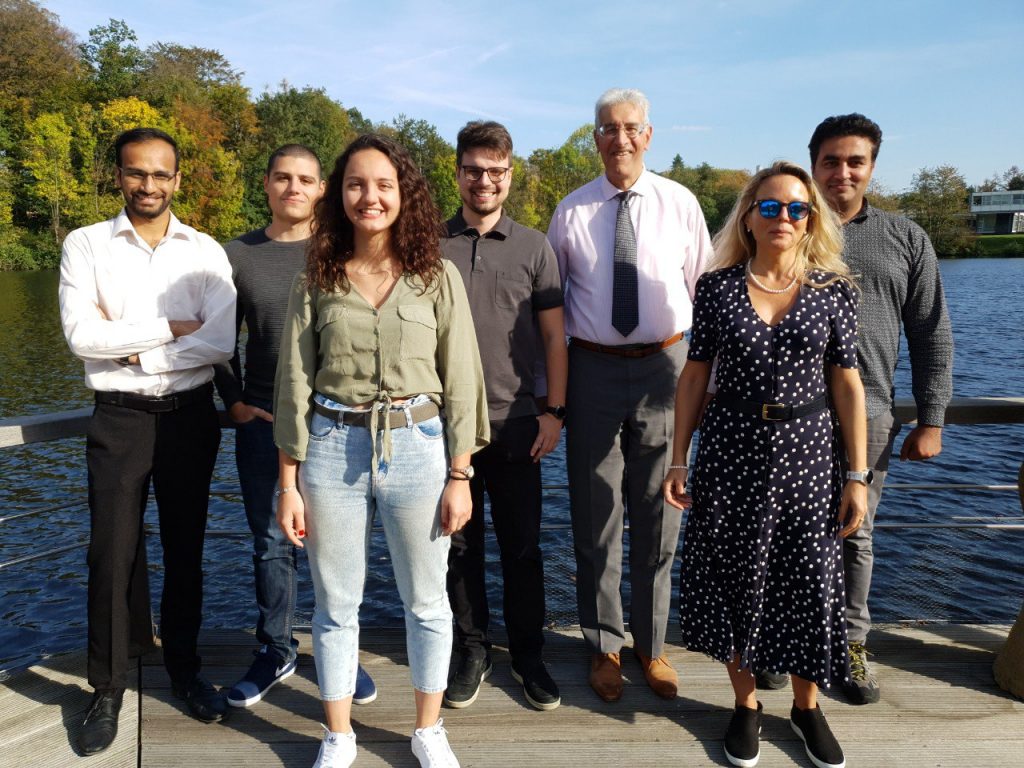 In today’s interview, we discuss the latest paper by Robert Claeser, Markus Zimmermann, and N. Jon Shah from the Institute of Neuroscience and Medicine at the Jülich Research Centre in Germany. Their paper presents a gradient-delay corrected implementation of the spiral TAPIR (T1 mapping with partial inversion recovery) pulse sequence, which was used to acquire sub-millimeter T1 maps of rapidly relaxing compartments.
For those who would like to get a quick overview of our discussion, below is an annotation of the interview. Clicking on the timestamp will take you to the exact video location where the topic is discussed.
00:00 Introduction: MRM Highlights contributor Mathieu Boudreau introduces the interviewees and their paper.